
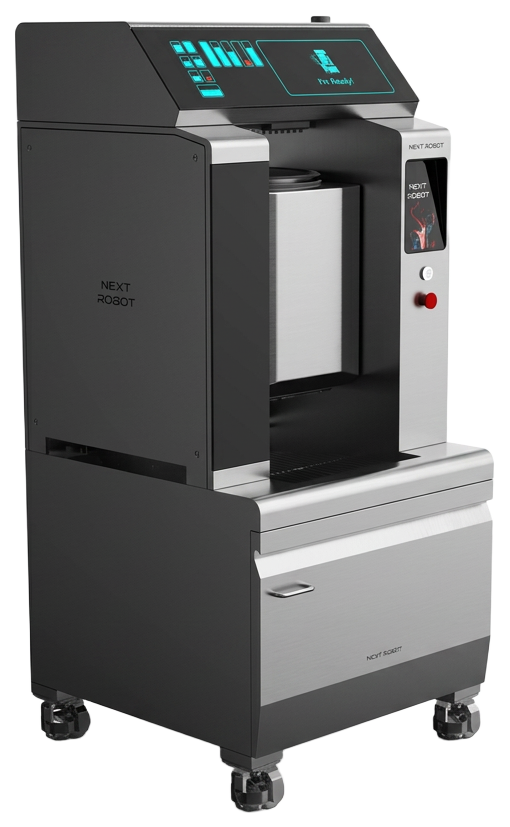
Robby One

Robby One

Consistent, high-volume scratch cooking with precision control, guided operation, and support for scaling production across locations.

Precision cookingGuided workflowsHigh-volume productionMulti-location support
Robby One automated batch cooking automation
  1. 1Prepare and loadYour team prepares and measures ingredients, then loads the system according to the approved recipe and operating instructions.
  2. 2Select the validated recipeUse an established cooking program for a compatible dish. Recipe setup and validation are part of the agreed onboarding scope.
  3. 3Run the cooking cycleThe system carries out its programmed cooking sequence. Operators remain responsible for required checks, handling, and responding to exceptions.
  4. 4Unload, clean, and prepareTransfer the finished batch and complete the cleaning and reset steps specified for the equipment and recipe.

Cooking in action

See Robby One at Work

From programmed ingredients to controlled heat and automated stirring, follow a batch through its cooking cycle.

Robby One preparing lo mei at an East Coast kitchen.

Features & capabilities

Controlled Cooking. Coordinated Production.

Bring cooking quality, operator guidance, and production visibility into one commercial cooking platform.

Precision Cooking & Food Quality

A controlled cooking process built around repeatable scratch cooking.

  • Vision- and temperature-based control adjusts cooking to food appearance and thermal conditions.
  • Dynamic heat control supports flavor development throughout the cooking cycle.
  • Automated stirring, rotation, tilt, and pot movement support even cooking.
  • Programmed seasoning and ingredient timing keep sauces, spices, and additions aligned with the recipe.
Simpler Operation & Training

Give staff a clear, repeatable workflow across shifts.

  • SOP-driven execution translates recipes into system-guided steps.
  • Voice guidance supports operators during cooking and transitions.
  • A simplified interface presents the information needed for the next step.
  • Manager training resources and role-based playbooks help restaurant and hospitality teams put released staff time to work.

Recipe Control & Operational Visibility

Keep recipes and production workflows coordinated across your operation.

  • Remote recipe management supports editing and deploying recipes and steps from a mobile device.
  • Workflow coordination sequences cooking and preparation tasks.
  • Remote software and recipe updates support ongoing system improvements.
  • Operational reporting provides visibility into production volume, ingredient usage, and peak activity.

High-Volume Batch Production

Support sustained production during high-demand service windows.

  • High-capacity batch cooking and sauce handling support volume production.
  • A continuous-operation design supports repeated, back-to-back cooking cycles.
  • Concurrent heating and cleaning capabilities support preparation for the next batch.
  • Multiple cooking vessel options support different materials and cooking-temperature needs.

Cleaning, Maintenance & Safer Handling

Reduce routine manual tasks while keeping operator responsibilities clear.

  • Automated cleaning cycles support routine cleaning between batches and shifts.
  • Automated startup and shutdown checks simplify daily maintenance procedures.
  • Safety-focused design limits manual handling of high-heat tasks.
  • Follow the model’s operating, cleaning, and food-safety procedures for your menu and site.

Deployment & Multi-Location Support

Plan equipment, training, and service around each location’s requirements.

  • Multi-location deployment support helps standardize rollout across regions and property portfolios.
  • Review regional service coverage and defined response terms as part of your deployment scope.
  • Confirm applicable NSF, UL, and safety certification documentation for the selected model before ordering.
  • Validate recipe fit, site readiness, and operating requirements before expanding.

What We Review Before You Order

Recipe fit
Validate representative dishes.
Batch output
Confirm usable quantity for your recipe.
Production cycle
Include loading, cooking, unloading, and cleaning.
Site readiness
Confirm dimensions, electrical supply, and installation needs.
Operating requirements
Review staff tasks and cleaning procedures.
Product documentation
Review current model specifications, warranty, and applicable certifications.
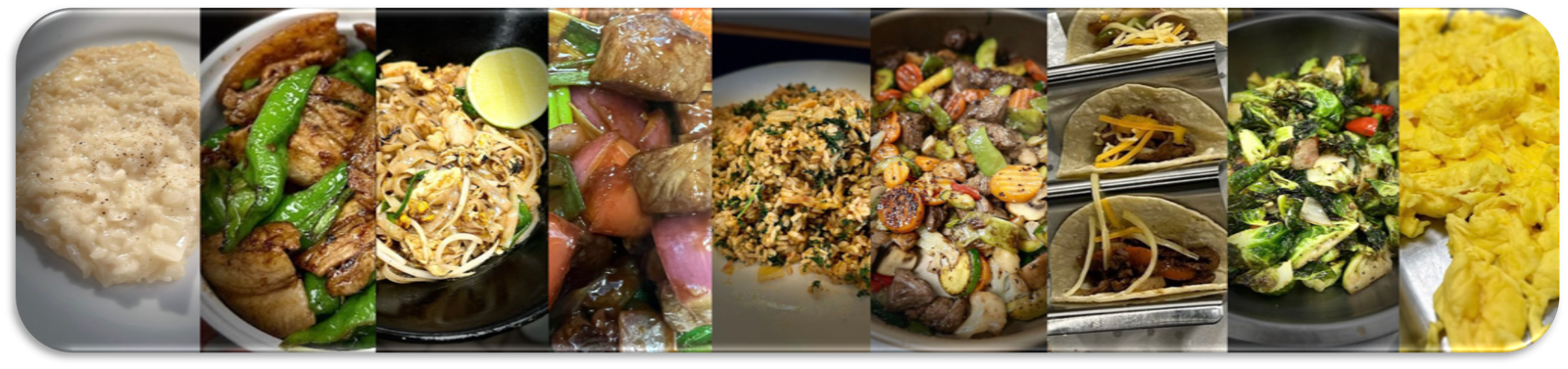
Nine dishes cooked by Robby One — rice, stir-fries, noodles, stews, tacos, and eggs

Prove One Application. Then Plan the Next.

Start with a representative recipe and normal operating conditions. Compare full-cycle output, staff handling time, food quality, and cleaning effort before considering more units or locations.

ROI calculator

Explore the Business Case With Your Own Numbers

Adjust the assumptions below. Everything recalculates instantly — nothing is sent anywhere until you ask us for a tailored model.

The default values are illustrative only. Results are not a quote or an expected outcome for your operation. Staff time released for other duties is not automatically a payroll saving; use measured pilot data and conservative assumptions.

Illustrative assumptions only — not a quote or an expected outcome. Released staff time is not automatically a payroll saving. Use measured operating data; avoid counting the same benefit twice.

Core inputs

Labor assumptions

Investment assumptions

Training cost assumptions

Robby One: 4 training days

Planning assumption for proficient operation. Actual readiness depends on the operator, recipes, and site.

Conventional cook training cost
$1,768
Robby One initial training cost
$707
Annual replacement-training savings
$849
Additional cost savings

Robby One FAQ

Questions About Robby One.

Straight answers on what Robby One does, what it can cook, and what your team remains responsible for. Find more answers on the full FAQ page.

What does Robby One do?
Robby One automates programmed batch-cooking sequences for compatible recipes. It focuses on medium and high heat cooking using sauté, mixing, and stir-fry techniques. Your team prepares and loads ingredients, carries out required checks, unloads food, and completes approved cleaning and reset procedures.
Can it cook our existing recipes?
Robby One can cook existing recipes that are compatible with its batch-cooking sequences and automation programming. Your team evaluates taste, texture, portions, and presentation before accepting a recipe for routine use. Not every dish will be suitable.
How much can it cook and how quickly?
Usable batch size and cycle time depend on the model, recipe, ingredients, and handling process. Robby One can cook up to about seven pounds of food per batch in about two and a half to five minutes, depending on the ingredients and recipe. We confirm current specifications and evaluate the complete cycle for your application rather than quoting a universal servings-per-hour figure.
What electrical supply and certifications are required?
Robby One requires a three-phase electrical configuration — 15 kW at 208–240 V, three phase. We review your site’s requirements before installation, confirming the exact configuration, applicable certifications, and any local approvals.
How is cleaning handled?
Operators follow a standard operating procedure we provide, recommended for integration into their existing workflow to maintain Robby One. For additional cleaning for maintenance purposes, we also provide the necessary steps to keep Robby One running smoothly and the cooking pot working correctly.